Inspiration and Guidance
Insights
Welcome to Insights!
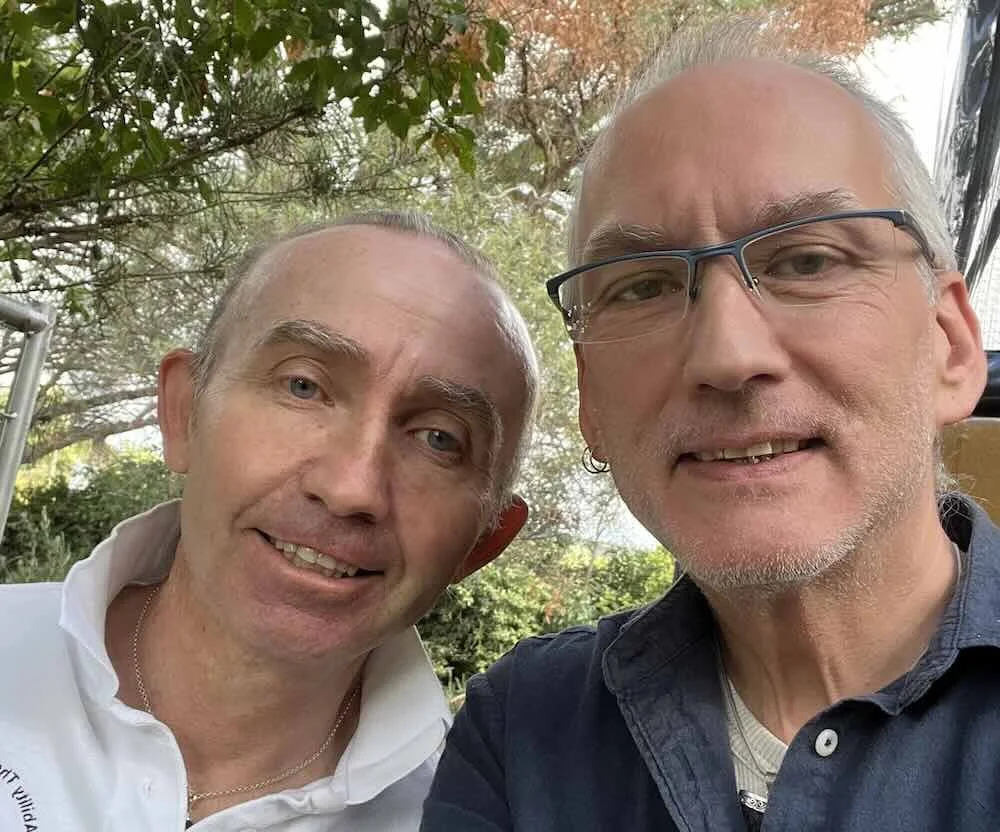
We are Dr Jo and Dr Dee, PhDs in Counselling Psychotherapy.
As down-to-earth and practical people. We help others to solve problems and find solutions.
Our therapy work is heartfelt and applied to real life.
This blog now newsletter shares our insights over the years - the current version is a re-make of our longstanding blog that began in 2015. As a niche community based project we’ve had over 50,000 visitors to our site during these ten years. That is an impressive accomplishment in Australia.
We hope you enjoy!
Double Gifted - And Fabulous
Rare to reframe complex diagnosis as giftedness - but this is all about perception. What you see is what you get. So why not see past the mask?
Reframing Dual Diagnosis as Giftedness
Many people with a dual diagnosis have both a disability and a mental health condition. Sometimes, this can make life harder. But what if we looked at it differently? What if we saw the special gifts behind these challenges?
Understanding Dual Diagnosis
Dual diagnosis means having two different issues at the same time. For example, a person might have autism and anxiety. Or intellectual disability and depression. These combined difficulties can be tricky to manage.
However, focusing only on the difficulties can make us forget the person’s strengths and talents. Every person has unique abilities that can shine when we pay attention.
Looking beyond the surface - the key to understanding self and others
Seeing Abilities and Strengths
When we reframe dual diagnosis as giftedness, we start to notice special skills. For example, many people with autism are very good at noticing details others miss. They might have a great memory or be strong at puzzles and patterns.
People with certain mental health challenges may have deep creativity or show enormous courage. These talents can help them and others in many ways.
Why Reframe Matters
Changing how we think about dual diagnosis matters for the person and their support team. When we see giftedness, we can build on those strengths to help the person grow.
This approach helps families, teachers and therapists provide better support. Instead of focusing on what a person can’t do, they focus on what the person can do.
Practical Steps to Appreciate Abilities
Listen carefully to each person’s interests. What do they enjoy? What makes them happy?
Encourage skills they already have. Join them in activities that use these strengths.
Create plans that include their talents. This can boost their confidence and make learning fun.
Conclusion
Dual diagnosis is challenging, but it is also a chance to see the amazing abilities in someone. By appreciating these gifts, we help people reach their potential. Focusing on strengths rather than limitations changes lives for the better.
Everyone deserves to be seen for their abilities. This way, we all grow together.
Dr Jo, PhD, is a senior Psychotherapist and Behaviour Support Specialist registered with the National Disability Insurance Scheme. He works from Armidale NSW Australia and consults across the country. He works with Dr Dwayne Kennedy with consultant services available online today. Send us a line via the form on Home Page.
"My situation is high-risk. Why don't I have a behaviour support plan?" Understanding NDIS Safety Plans vs. Long-Term Plans
Deep dive into why BSPs can take a while to create, how to engage the process, and ways to address the challenges to find help and work with the help when you find them.
Preface
This post is a special edition ‘Deep Dive’ into one of the many profound questions that come up often in our work. It provides a more comprehensive analysis that draws information together in one place, for those interested in reading further. We cite the sources as well - so all of the information provided here is up to date at the time of writing. Don’t trust our word on this however - always research the sources. The NDIS in particular is well known for changing regularly! We urge you to do your own research and keep informed.
Estimated Reading Time: 9-10 minutes
Reading Tip: Click on the articles - they open up to nice layout to read more easily.
Audio Tip: Use your favourite app to ‘read aloud’ - we suggest Google Read & Write as it has a solid free version and works with Google Chrome.
Image of a Black Page with the word ‘Plan’
Introductions
In today’s world introductions are often overlooked in their importance. While often these come at the end of articles, we’ve decided for good reason to introduce you to the author up front.
Dr Jorandi (Jo) Kisiku Joseph Randolph Bowers is a PhD in Health Counselling Psychotherapy, a qualification they earned from winning a doctoral teaching and research scholarship at UNE from 1998 to 2002. Doc Jo has three doctoral degrees, as well as many qualifications and years of experience. They worked full time as a Behaviour Specialist since 2012, well before the NDIS rolled out in Australia. His practice focuses often on highly complex cases with dual and multiple diagnosis.
Jo works with and founded Ability Therapy Specialists with another senior behavioural specialist, Dr Dwayne Wannamarra Andrew Kennedy. Dr Dwayne is a PhD in Counselling with many degrees in education and community based services. He has worked in disabilities since youth, and in specialist behaviour support since around 2016 with full time work in this area since 2018.
As many like to know more about the author, Jo earned a Doctor of Divinity in Ceramic Arts & Spirituality, received an Honorary Doctor of Divinity in Spirituality, and holds a Master of Education in Counselling Psychotherapy, Diploma in Ericksonian Hypnotherapy and Counselling, Practitioner Certification in Neuro-Linguistic Psychotherapy, and a Bachelor of Arts in Spirituality & Philosophy.
Jo is a NDIS registered specialist behaviour support practitioner and counsellor, senior honorary member with the Australian Counselling Association, senior fellow of the Australasian Society of Lifestyle Medicine, and author of over 250 works including a dozen books. Having worked in specialist behaviour support in the years prior to NDIS roll out, Joseph Randolph was asked by managers to stay in regional New England in NSW and set up a community practice. This led Jo to take up the work of Director and Senior Clinical Specialist with Ability Therapy Specialists Pty Ltd, a registered NDIS provider in Australia. Their work includes telehealth therapy for people across the country – often helping where waiting lists are extreme and in Australia’s most rural, remote and bush settings.
Jo is an author of over 250 works, with a dozen books including ‘Clay Art Therapy and Spirituality,’ ‘The Practice of Counselling,’ ‘Mi’kmaq Puoinaq Two Spirit Medicine,’ ‘Sacred Teachings from the Mi’kmaq Medicine Lodge,’ and ‘Solitude Awakens: The Heart, Forest, Mountain Way.’
A Guide for Participants and Families
We know that waiting for a behaviour support plan can be stressful, especially when you're managing high-risk situations. You may have heard about a "30-Day Rule" and are left wondering, "Why is my plan taking so long?"
This is a common and completely valid question. Here’s the simple answer:
That 30-day timeline is a specific legal safeguard that only applies when a 'restrictive practice' (like using locked doors, gates, or physical restraints) is involved. It’s a human rights rule to make sure those practices are monitored.
But what if your situation is high-risk, but doesn't involve those things? Does that mean you just wait?
Absolutely not.
Your provider's first legal and ethical duty is to your immediate safety. This is covered by different NDIS rules (the Code of Conduct and Practice Standards). In any high-risk case, a good practitioner's first step isn't to write a comprehensive plan, but to create an interim safety plan.
This "safety plan" is a vital document. It gives your support team and family clear, immediate steps on how to de-escalate and manage unsafe situations right now.
This immediate safety plan allows the practitioner to do the most important job: a proper assessment (we call it a "Functional Behaviour Assessment" or FBA) to understand the why behind the behaviour. A final plan written without this assessment is just guesswork.
In short: A "safety plan" comes first (for immediate risk). The full "behaviour support plan" comes later (for long-term change).
This article explores the details of these different NDIS rules. It's helpful for understanding your rights and what you should expect from your provider. For providers and other professionals, the fully cited analysis is included below.
Image of a person sitting with a laptop and puppy looking to the camera
Deeper-Dive Summary for Humans
For NDIS providers and practitioners, the "30-day rule" for behaviour support plans (BSPs) is a common point of focus. However, this timeline is widely misunderstood. Our analysis confirms this 30-day deadline applies only to cases involving a regulated restrictive practice (RP). This is a human rights safeguard, triggering the need for a lodged "Interim BSP" (Part 3, Section 12 of the NDIS (Behaviour Support) Rules 2018).
But what about high-risk cases where no restrictive practices are present? The Behaviour Support Rules do not set a specific deadline for these scenarios. Instead, urgency is dictated by a different, and often more immediate, set of obligations:
Provider's Duty: The NDIS Practice Standards (Core Module, Section 4: Risk Management) require providers to have a system to "identify, analyse, prioritise and treat" risks. A high-risk history (even if stable) is a known risk requiring proactive management.
Practitioner's Duty: The NDIS Code of Conduct (Section 1(d)) mandates a Duty of Care, requiring practitioners to "provide supports and services in a safe and competent manner, with care and skill."
Reactive Duty: If a high-risk behaviour does cause harm, the NDIS (Incident Management and Reportable Incidents) Rules 2018 (Part 2, Section 6) apply, requiring a Reportable Incident notification within 24 hours.
In all cases, the Functional Behaviour Assessment (FBA) must be completed before the Behaviour Support Plan (BSP). For the 30-day Interim BSP, the law explicitly requires it to be based on a "preliminary functional behaviour assessment" (Section 12(3)(a) of the Behaviour Support Rules). For high-risk, non-RP cases, best practice (driven by the Code of Conduct) involves an "interim safety plan" to ensure immediate safety and guide data collection for the full FBA.
Key Points
The 30-day (1-month) timeline is for lodging an Interim BSP and is triggered only by the use of a Regulated Restrictive Practice (RP).
Source: NDIS (Behaviour Support) Rules 2018, Part 3, Section 12(1).
This Interim BSP must still be based on a preliminary FBA. The FBA always comes first.
Source: NDIS (Behaviour Support) Rules 2018, Part 3, Section 12(3)(a).
For cases with no RPs (even if high-risk), the 30-day rule for BSPs does not apply. The Behaviour Support Rules timelines are tied to the lodgement requirements for RPs.
The urgency for high-risk, non-RP cases is driven by:
The provider's Risk Management obligations.
Source: NDIS Practice Standards, Core Module, Section 4: Risk Management.
The practitioner's Duty of Care.
Source: NDIS Code of Conduct, Section 1(d).
If a high-risk behaviour results in a critical incident, the 24-hour Reportable Incident timeline is the primary legal driver for an immediate response.
Source: NDIS (Incident Management and Reportable Incidents) Rules 2018, Part 2, Section 6.
Clinically, a practitioner should still create an "interim safety plan" for any high-risk case to manage immediate safety. This is a clinical best-practice tool derived from the duty of care, not the legislated "Interim BSP" document.
Navigating the Grey: Reconciling NDIS Timelines, High Risk, and the Functional Behaviour Assessment (FBA) -First Principles
For NDIS Behaviour Support Practitioners and providers, navigating the legislative landscape is a complex task of reconciling clinical best practice with a rule-based framework. A central point of confusion is the timeline for intervention, particularly in high-risk cases.
The framework, especially the NDIS (Behaviour Support) Rules 2018, appears to tie all urgency to the use of regulated restrictive practices (RPs). This leaves a critical question: What are the legislative provisions for a participant who presents with high-risk behaviours but has no RPs in place?
This article analyses the interplay between the NDIS Rules, Practice Standards, and Code of Conduct to clarify the required order of operations, with direct citations for verification.
Section 1: The "Known" Rule (The 30-Day RP Clock)
The most commonly cited timeline is the one-month (30-day) rule. This is found in the NDIS (Behaviour Support) Rules 2018, Part 3, Section 12.
What it is: This rule mandates that a behaviour support plan (an Interim BSP) must be lodged with the NDIS Commission.
When it applies: It is triggered only when a regulated restrictive practice is first used with a participant.
Source (Section 12(1)): "If... a behaviour support plan that provides for the use of a regulated restrictive practice... has not been developed, the NDIS provider... must ensure that... an interim behaviour support plan... is developed... and... a copy is lodged with the NDIS Commission... within 1 month after the use of the regulated restrictive practice..."
What it requires: A common misunderstanding is that this 30-day rush means the BSP is written before the assessment. This is incorrect. The Rules explicitly state the Interim BSP must be:
Source (Section 12(3)(a)): "...based on a functional behaviour assessment, which may be a preliminary functional behaviour assessment..."
The legislation correctly anticipates that a comprehensive assessment is impossible in 30 days. It therefore makes provision for a "preliminary FBA." This triage-style assessment allows the practitioner to form an initial hypothesis of function, identify immediate risks, and create a plan that, first and foremost, ensures the RP is being used as safely as possible.
The 30-day clock, therefore, is a specific human-rights safeguard triggered exclusively by the use of RPs.
Section 2: The Apparent "Gap" (High-Risk, No RPs)
This brings us to the core dilemma. What provision covers a participant with a history of severe self-injury, physical aggression toward others, or dangerous absconding, but for whom no RPs are authorised or in use?
If a practitioner searches the Behaviour Support Rules 2018 for a timeline, they will not find one. This is because the legislative urgency for this scenario is not located within the Behaviour Support Rules. The timelines in Part 3 (Interim) and Part 4 (Comprehensive) are structurally linked to the lodgement and oversight of plans containing restrictive practices.
To assume no urgency is required is a critical error. The urgency is simply driven by different, and often more immediate, legal requirements.
Section 3: The True Provisions for High-Risk, Non-RP Cases
In the absence of the 30-day RP clock, a practitioner and provider must turn to three other core pillars of the NDIS framework.
1. The NDIS Practice Standards (Proactive Risk Management)
This is the provider's primary proactive obligation. Under the NDIS Practice Standards and Quality Indicators, Core Module, Section 4: Risk Management, providers must demonstrate:
"Each participant’s support plan includes a risk assessment that identifies risks to the participant... Risks are managed through a risk management system... The provider’s risk management system supports the provider to identify, analyse, prioritise and treat risks..."
A referral for a participant with a "history of high risk" (even if currently stable) is a clearly identified risk. The provider's own NDIS-audited system legally obligates them to "treat" this risk. In this context, "treatment" is the commissioning of a specialist behaviour support assessment (an FBA) to proactively mitigate that risk.
2. The NDIS (Incident Management and Reportable Incidents) Rules 2018 (Reactive Response)
This is the provider's primary reactive obligation. If the participant's high-risk behaviour results in a "Reportable Incident" (RI)—such as those defined in Section 5 (e.g., "the serious injury of a person with disability")—an immediate legal timeline is triggered.
Source (Section 6(1) & 6(2)): The provider must notify the NDIS Commission of the RI within 24 hours of becoming aware of the incident.
Following this notification, the Commission will require the provider to detail the "remedial action" taken. This action would, by necessity, include an urgent clinical response, such as commissioning an immediate FBA and safety plan. In this scenario, the 24-hour RI rule provides a far more rapid trigger for intervention than the 30-day BSP rule.
3. The NDIS Code of Conduct (Practitioner's Duty of Care)
This is the provision that governs the individual practitioner. All NDIS workers and practitioners are bound by the NDIS Code of Conduct, which is a legislative instrument under the NDIS Act 2013.
Source (Section 1(d)): The Code requires that practitioners must:
"provide supports and services in a safe and competent manner, with care and skill."
A "competent" practitioner, upon receiving a referral detailing high-risk behaviours, has an ethical and professional duty of care. They must use their clinical judgment to triage this case at a high priority. De-prioritising the case simply because it lacks an RP—and therefore a legislative lodgement deadline—would be a failure to act with "care and skill."
Section 4: The Interim Plan Dilemma (Legislative vs. Clinical)
Given these provisions, why does the legislation not offer an "Interim BSP" provision for high-risk, non-RP cases?
The answer lies in the critical distinction between a legislative document and a clinical tool.
The Legislative "Interim BSP": This is a formal, legal document. Its sole purpose is to be lodged with the NDIS Commission to provide oversight for a human rights-impacting restrictive practice (as defined in Section 12 of the Behaviour Support Rules). Because there are no RPs in our scenario, the Commission does not require a document for lodgement. Therefore, the legislative provision is not "triggered."
The Clinical "Interim Safety Plan": This is a best-practice tool. It is what any competent practitioner should develop in any high-risk case. It is not called an "Interim BSP" and it is not lodged with the Commission.
This clinical document is mandated by the practitioner's Duty of Care (under the NDIS Code of Conduct). Its purpose is to:
Provide immediate risk-mitigation guidance to the support team.
Outline clear de-escalation strategies.
Establish the specific data collection methods required to complete the full FBA.
This interim safety plan is the provision. It is the first step in the FBA process, not a replacement for it.
Image of a lady on mobile phone at a laptop outside at table in garden
Conclusion: The Functional Behaviour Assessment (FBA) is Always First
The logical and legal progression for any behaviour support case is clear, though it requires looking at the entire NDIS framework, not just one set of rules.
The FBA is the Priority: A BSP—whether interim or comprehensive—can never be written without an FBA. The assessment always comes first. This is explicitly stated for Interim BSPs in Section 12(3)(a) of the Behaviour Support Rules.
The Trigger Defines the Timeline:
If RPs are present: The 30-day lodgement clock for an Interim BSP starts (Behaviour Support Rules, S12). The first job is a preliminary FBA.
If RPs are absent (but risk is high): The provider's Risk Management standards (Practice Standards, Core Module, S4) and the practitioner's Duty of Care (Code of Conduct, S1(d)) create the urgency. The first job is to create an interim safety plan based on a preliminary FBA.
If an incident occurs: The 24-hour RI rule forces an immediate organisational response (Incident Management Rules, S6).
Disclaimer
The content provided in this article is for general informational purposes only and does not constitute legal, clinical, or specialist behaviour support advice. It should not be relied upon as such.
All information is provided in good faith, however, we make no representation or warranty of any kind, express or implied, regarding the accuracy, adequacy, validity, reliability, or completeness of any information. The NDIS legislative framework, including the NDIS Act 2013 and associated Rules and Practice Standards, is complex and subject to change.
This article is not a substitute for professional advice from a qualified NDIS Behaviour Support Practitioner. You should always consult with an appropriate professional to address your specific circumstances. Under no circumstance shall Ability Therapy Specialists Pty Ltd have any liability to you for any loss or damage incurred as a result of the use of this information. Reliance on any information provided in this post is solely at your own risk. This article, website, and your participation are governed under the Client Booklet - Privacy Policy: Disclaimer, Terms, Conditions as a necessary provision under Australian service quality standards.
Thank You from Dr Jo - And Safe Holidays Ahead
We wanted to take this moment as we head to end of November - can you believe it? To say Thank You to all the people who supported our service this year with referrals and to clients who rely on our roles in their lives - a huge thank you.
Positive Behaviour Support 101
Positive Behaviour Support is awesome actually, and life changing for anyone who wants to have a go.
Seeing Strengths in Support
When we think about behaviour support, it often sticks to psychology as just a discipline. But there’s a better way to look at it.
A Person-Centred Approach
Person Centred Psychotherapy focuses on the whole person. It uses a strength-based approach. This means the language is friendlier, easier to understand, and more caring.
Enjoy each moment.
What Does Support Really Mean?
Support is about helping someone. It means enabling them and walking alongside them on their journey. Support is also about listening carefully. When we listen well, we open up new possibilities.
Working Together to Find Strengths
We create plans with the people we support. Even those with profound disabilities have strengths and abilities. Instead of looking at what’s missing, we look at what’s there. People often see the glass as half-empty. But therapy helps us see it as half-full.
Celebrating What You Can Do
Focusing on your skills feels good! You can celebrate what you already have. Then we ask, how can we build on that? Positive behaviour support moves from just managing problems to encouraging growth and change.
Being Different is Okay
What seems radical or different for one person might be normal for another. Only the person and their supporters truly know what works best. Skilled therapists can help challenge and support everyone.
Every person is different, same with flowers.
Transforming Disability into Strength
Don’t underestimate ability.
Turn what some see as a disability into strength and capacity.
‘Invig-ability’ means giving energy and life to someone who might feel stuck. It’s about moving forward with new energy.
That’s the path to real change.
Dr Jo is a Counselling Psychotherapist and registered provider with the National Disability Insurance Scheme.
Behaviour Support, for real.
Behaviour support for real life is balance and flow. Join Jo Bowers PhD to reflect on the mystery of finding the flow.
A Family Affair
One couple set their marriage at stake on the answer. One wanted to use a passive nurturing method. The other wanted to use firm discipline. And don't assume one is male and the other female. You would be wrong if you did.
Needless to say. The marriage ended at a stale mate. You know why?
Because nothing can last on extremes. If you want a marriage to work you need compromise. If you want behaviour support to work you need balance.
Balance of Factors
Not between extremes. To find balance you need reason and feeling in sync. Kids are not an abstract formula. Kids are real people with complex needs.
Too much of one. Things do not work. Too much of the other. Things do not work.
More Like a Circle
But not so much this and that - behaviour support is more about plus this and then more. You look for the whole view - the ways things flow in real life.
We call this ecology, some say ‘holistic.’
We think this perspective comes from observing life and relationships. And not a tad of wisdom. Buckets might help.
Nurturing the Flow
Structure and nurturing. Yes.
Boundaries and a bit of limited choices. Yes.
Freedom appropriate for the child's development. Yes.
But freedom is the partner of responsibility. Without one the other will fail.
So, it goes. The mix is unique for each child. Each person. Yet don't we want to get it right? Yes. Indeed.
Behavioural support in real life is about balance and flow. It is keeping relationships healthy, and finding ways to support our needs and the needs of others.
We look at the behavioural life of two-legged (humans) as highly flexible and yet given to patterns, routines, and cumulative processes. One things leads to the next, and the narrative is not always easy to understand.
About ATS
ATS is a registered behavioural specialist service under NDIS, with practitioners PhDs Jo Bowers and Dwayne Kennedy. We are members of the Australian Counselling Association, and the Australasian Society for Lifestyle Medicine. We work via telehealth with NDIS participants in behaviour support, counselling, and therapy assessment funded areas.
Life is a balance, sometimes even a dance.
How to Learn from Experience
Learning is fun! Who says? Here are ways to enjoy learning and change.
Here are a few simple steps to learning from experience - any experience at all.
Reflect on these questions while day dreaming, writing, drawing, painting, or creating something, even cooking.
What happened? Describe it.
How did you feel? What was your inner reaction?
What thoughts went through your mind during, and not long after?
How do you feel now about the experience?
What questions or unresolved issues remain, if any?
Some clients use this format for writing an email to a therapist. It gives them a more clear focus.
They end up learning heaps from the exercise, and then they get helpful feedback from their counsellor.
Learning is fun. Who says?
People who live with disability often learn through these steps.
Have an experience.
Repeat it.
Briefly talk about it, see if you like it.
Try it again. Repeat.
If it feels good, keep doing it.
The trick is not to think too much. Disability often involves making things simple, or things are kind of simple already.
When you think too much, it can complicate things. Just do it. Try it. Repeat.
Once behaviour becomes a habit - it sticks. You do not need to think too much.
Habits form fast when they are fun. It is when we are trying too hard to change that change gets hard.
But even shifting into a new habit to replace something not safe or helpful can be easier.
The key is to find the smallest way to change that is fun, feels better, and has a bit of motivation.
Motivation is everything.
Behaviour Support and Human Rights
Human rights are central to positive behaviour support. Here we review key values.
Behaviour Support does not exist in a vacuum.
All behaviour support happens in familial, social, community, legal, legislative national, and international policy contexts.
Simple but potent sign on a street post says it all - every human has rights.
Key Human Rights
Here are a few of the basic human rights involved in behaviour support practice.
These touch on relationships in families, communities, and nations. These come directly out of international, national, and state based policy and practice standards.
Every person has the right to:
Dignity and respect
Live in and be part of a community
Realise their individual potential and capacity for physical, social, emotional, intellectual, psychological, and spiritual development
Access services on an equal footing to others in society that support a reasonable quality of life
Choose their own lifestyle and to have access to information
Participate in decisions that affect their lives and future
Receive services in a way that results in least restriction of personal rights and opportunities and human freedoms
Address any grievance or complaint without fear or recrimination from service providers including fear of the discontinuation of services
Protection from neglect, abuse, exploitation, and harrassment
Citation: Behaviour Support: Policy and Practice Manual Part 1, NSW Department of Ageing, Disability and Home Care, 2009
Dr Dwayne and Dr Jo are PhDs and senior counselling psychotherapists and behaviour specialists, registered with NDIS so funding is available for NDIS participants. We work across Australia via telehealth - online using zoom, facetime or your favourite app. Get in touch via the form on home page.
Beautiful display of colour showing respect.
Beyond Talk Therapy - Getting Positive Outcomes
Therapy helps us in relationships and life, in practical ways. How vital this is during these times of change.
I Have Tried Psychology and Counselling for Years. I Have Talked Through My Problems Endlessly, and Nothing Has Changed.
Many people feel stuck after years of talking therapies. They may say, "I have tried psychology and counselling for years. I have talked through my problems endlessly, and nothing has changed." If this sounds familiar, you are not alone. While talking is important, practical change is what makes a difference.
Personal time is key. Relaxing with yourself.
Moving Beyond Talking
Talking about problems is helpful to some extent. It helps you understand your feelings and challenges. However, without action, nothing shifts. Our approach at Ability Therapy Specialists is different. We focus on practical behavioural change. We help you learn new skills that work in real life.
Practical Behavioural Change
We do not just explore your feelings. We work with you to find solutions you can try immediately. This could be changing a routine, building skills to manage stress, or learning new ways to communicate. We focus on what will work best for your everyday life.
Solutions That Fit Your Life
Every person is unique. What works for one may not work for another. That is why we tailor our plans to suit you. We involve you in making the plan. This way, you feel confident to use the strategies. Our goal is to make changes simple and achievable.
Having Fun While Changing
Change can be hard. It can feel overwhelming and tiring. We believe change should also be enjoyable. Our therapists bring creativity and fun into the process. Using games, activities, and positive reinforcement, we help you stay motivated. Learning new skills becomes a positive experience, not a struggle.
People love talking about their life - and good therapists actually listen!
Leaning Into Positive Change
Small steps can lead to big changes. We encourage you to lean into positive change at your own pace. Our support helps you celebrate every success, no matter how small. With consistent practice, new habits form, and life starts to feel better.
In Summary
If you have tried talking therapies without seeing change, consider a fresh approach. Ability Therapy Specialists offer practical, solution-focused therapy. We help you create real changes in your life. Together, we make therapy useful, fun, and effective. This approach empowers you to move forward, build skills, and enjoy a better quality of life.
Send us a line via form on home page.
Understanding Relationship Behaviour Support
Relational behaviour support is funded under NDIS as a practical solution focused service. Learn more here.
Relationship behaviour support is an important part of helping people with disabilities and mental health needs build positive connections with others. At Ability Therapy Specialists, we focus on providing practical strategies that improve interactions and reduce challenges in relationships.
What is Relationship Behaviour Support?
Relationship behaviour support involves understanding behaviours that affect how people relate to family, friends, carers, and others around them. It looks at reasons behind behaviours and works to promote respectful and positive communication.
All relationships need support - behaviour therapy is a practical way to help
Why is it Important?
Good relationships contribute to a person’s overall wellbeing. Difficult behaviours can lead to misunderstandings, frustration, and isolation. Support helps people express their needs clearly and develop skills to interact comfortably with others.
Who Can Benefit?
People with disabilities, mental health needs, parents, families, and support staff all benefit from relationship behaviour support. It helps everyone involved understand each other better and work together to solve challenges.
How Does It Work?
Our approach begins with listening to the person’s story. We then assess behaviours in everyday life to identify what causes stress or conflict. Using functional assessments, we create personalised behaviour support plans tailored to each individual’s needs.
Practical Solutions for Everyday Life
Support includes teaching practical skills such as:
Managing emotions
Communicating needs effectively
Building social skills
Responding calmly in difficult situations
We also provide guidance for families and carers on how to create supportive environments that encourage positive behaviours.
Using Telehealth and Online Services
Ability Therapy Specialists offer telehealth and online consultations to reach people nationwide. This means support is accessible regardless of location, enabling consistent help for clients and their support networks.
We meet you where you are at - on your device. One day soon, in your eye glasses too.
The Role of Behaviour Support Plans
A behaviour support plan is a detailed guide that outlines strategies to encourage positive behaviour and reduce challenging behaviour. Plans are regularly reviewed and updated with input from the person and their team.
Working Together for Success
Relationship behaviour support is most effective when everyone involved collaborates. This includes the person receiving support, family members, carers, and professionals. Together, we create a respectful and understanding environment that nurtures positive connections.
Contact Ability Therapy Specialists
If you or someone you care about needs help with relationship behaviours, Ability Therapy Specialists offer expert guidance and practical solutions. Our professional team supports you to improve everyday interactions and build stronger relationships across Australia.
See our contact form on the home page and get in touch. We are NDIS Registered for funding using your NDIS Plan.
Understanding Behaviour Support
Behaviour support is really practical and life-changing because the approach builds on skills and abilities.
Behaviour support is a way to help people whose actions or behaviours are causing problems in their lives.
Sometimes, behaviours become too intense, happen too often, or last for a long time.
When this happens, it can affect a person’s quality of life and even their physical safety.
Behaviour support focuses on understanding these behaviours and finding ways to improve the situation.
Our clients meet us online - sharing intense and real life events. This is life-changing work.
When Is Behaviour Support Needed?
People may need behaviour support if their behaviours:
Happen very often (high frequency)
Last for a long time (long duration)
Are very strong or intense (high intensity)
These behaviours might cause harm to themselves or others. They can also make it hard for the person to take part in everyday activities, enjoy life, or be safe.
How Behaviour Support Helps
Behaviour support uses different strategies to help the person and those around them. The goal is to reduce the intensity, frequency, or duration of difficult behaviours. This can make life safer and better for the individual.
Support often begins by understanding why the behaviour happens. People don’t act in difficult ways without a reason. Behaviour support specialists look at what might be causing the behaviour, such as:
Health issues
Communication difficulties
Environment or setting
Emotional needs
What Behaviour Support Includes
Behaviour support can include:
Functional assessments to understand behaviour triggers and needs
Creating behaviour support plans that are safe and practical
Teaching new skills or ways to communicate
Training families, staff, and others who support the person
Regular reviews to see how well the plan is working
Practical therapy is more than good intentions - it is making real life changes that matter.
Benefits of Behaviour Support
Effective behaviour support can:
Improve safety for the person and others
Enhance the person’s independence and participation in daily life
Reduce stress and anxiety for the person and their support network
Offer practical solutions to everyday concerns
Conclusion
Behaviour support is about helping people whose behaviours affect their safety and quality of life.
By understanding the reasons behind these behaviours and working with the person, families, and support staff, behaviour support can create positive changes that make life better and safer.
At Ability Therapy Specialists, we are committed to providing professional, respectful, and practical behaviour support to help individuals reach their full potential.
Get in touch with Dr Dwayne and Dr Jo via the form on home page, or give us a ring and leave a message.
What is Functional Assessment of Behaviour - Why Do I need it?
Functional assessment of behaviour is really helpful. Here is why.
Most Practical and Useful of All
Base your effort on a functional assessment - and your intervention is twice as likely to be useful.
Said another way, get a functional assessment of behaviour and your path to change can be easier. Not always true in every case of course, but the general wisdom holds. The more we get what is happening - the easier it is to make changes.
Struggling with a behavioural problem is no fun, and can be dangerous to health and safety. The path to change and learning can sometimes be hard. Therapy is here to make this process a bit more manageable.
Solid Assessments are Key
By useful we mean that behaviour support based on solid assessment and intervention planning seeks to
1. increase safety wherever possible,
2. provide insight and hope,
3. create options and choices, and
4. reduce behaviours of concern and/or change environments and supports that then contribute to changes in behaviours.
In many cases these positive outcomes are documented by the behavioural therapist. This is accepting the fact that every situation is unique and that there are no guarantees.
Vital Assistance - Key Insights
Research and professional practice - over many years - shows that counselling and behaviour support assessments and interventions provide significant assistance to clients, families, and staff.
Smith et al (2016) looked at the relationship between biological setting events and problem behaviours.
Then they worked through a "functional analysis of each participant’s problem behaviour in relation to two context factors: fatigue and task demands."
By implementing a multi-component intervention to address both the biological setting factor and the behaviours of concern they reported a dramatic reduction in problem behaviour. The implications show that understanding and assisting with setting events contributes to addressing behaviours of concern.
No doubt life is complex at times - we simplify things so the path is a bit easier.
What You Know, What You Need to Know
In behaviour support, what you know is often not enough. People in everyday life miss the boat. That is natural. We are not trained to see what is underlying in behavioural patterns.
Specialists are trained and with experience to pick up on the patterns, to investigate the data, to uncover the motivations. These insights help sort what is happening. More important - how to make changes more easily.
Source: Christopher E. Smith, Edward G. Carr, Lauren J. Moskowitz, 2016, Fatigue as a biological setting event for severe problem behavior in autism spectrum disorder, Research in Autism Spectrum Disorders, Volume 23, March 2016, Pages 131–144.
Dr Jo and Dr Dwayne are senior counsellor psychotherapists and behaviour specialists - focused on real life therapy with people in everyday life via your smart phone or devices. They work on zoom, facetime or your fav apps. They reach out across Australia and are paid via your NDIS Funding Package Plan. Their private books are closed at the moment but let them know if you are interested in therapy - maybe they can find room to assist. Contact via the form on home page.
Great thing about assessment is - the therapist does the hard work.
Behaviour Support and Counselling Telehealth in Perth and Western Australia
We are so happy to open services for NDIS participants in Perth up to Broome and across WA - here is how you can engage.
Living in Perth or anywhere in Western Australia offers many benefits, but access to specialised therapy and behaviour support services can sometimes be challenging due to the vast distances involved.
At Ability Therapy Specialists, we bridge that gap through our professional telehealth services.
Tailored Hours for Western Australia Clients
Our telehealth sessions are structured with your convenience in mind. For clients based in Perth and throughout Western Australia, we typically schedule appointments during business hours from 8 am to 2 pm local Perth time. This timing ensures that you can easily fit therapy sessions into your day without disrupting essential routines, school, or work commitments.
If you happen to coordinate with others in the eastern states, please note that our workday hours adjust to 10 am to 4 pm Sydney time. This flexibility means our support can function seamlessly across time zones without compromising quality care.
We are delighted to work with NDIS participants in Perth and across WA - providing specialist behaviour support and counselling
Access Senior PhD Specialist Assistance Nationwide
Unlike many local-only providers, Ability Therapy Specialists offers the exceptional advantage of accessing senior clinicians with PhD-level expertise and decades of hard won experience. No matter where you are in Australia - you can enjoy this advantage.
With telehealth, distance is no barrier to receiving high-quality, evidence-based assessments and therapy.
Our team specialises in service delivery to people with disabilities and mental health needs, as well as their families and support networks.
Whether you are in a remote region of Western Australia or in metropolitan Perth, you gain access to practical, tailored solutions informed by years of clinical research and direct experience.
Why Choose Our Telehealth Services in WA?
National Reach: No matter how remote your location in WA, our services come to you in your home.
Convenient Scheduling: Dedicated appointment windows aligned with WA business hours.
Expert Support: Receive guidance from highly qualified clinicians, including those holding PhDs.
Comprehensive Services: Therapy, behaviour support plans, functional assessments, and ongoing consultations.
From Perth to Broome, we honour the spirit of Australia and are delighted to connect in service as senior specialist counsellor psychotherapists
Serving the Vast, Beautiful State of Western Australia
Western Australia’s vastness and natural beauty are unique, but accessing specialist therapy doesn’t have to be difficult.
We encourage families, support staff, and individuals across this great state to embrace telehealth as a reliable, effective way to achieve meaningful outcomes.
If you seek expert assistance from senior specialists who understand your specific needs and circumstances, contact Ability Therapy Specialists.
Our telehealth service is your pathway to professional support that transcends distance and time zones.
Ability Therapy Specialists is an NDIS-registered provider committed to offering equitable, accessible therapy and behaviour support services for all Australians who make this connection with our tailored boutique service.
Experience the advantages of telehealth — expert care is just a call or click away. Use our Contact form on Home Page, we look forward to hearing from you.
Supporting Families Across Brisbane and Queensland in Behaviour Support and Counselling
Brisbane and Queensland NDIS participants benefit by accessing our specialist senior therapy support - here is how you can too.
At Ability Therapy Specialists, we proudly support families across Brisbane and throughout Queensland, specialising in telehealth online therapy for complex and specialist cases. Being based in northern NSW is no barrier - we work with people across the country.
We recognise the unique challenges that mothers and fathers face when raising children with special needs.
That’s why we provide tailored parenting coaching designed to empower and guide parents every step of the way.
Tailored Parenting Coaching
Parenting a child with special needs can be overwhelming.
Our specialised coaching focuses on equipping mothers with practical strategies and emotional support.
We explore personalised approaches that work best for each family, helping to build confidence and resilience in daily parenting.
We love helping NDIS participants and their parents in Brisbane and across Queensland with counselling and specialist behavioural therapy - get in touch today
Compassionate Counselling and Behaviour Support
Our experienced team offers compassionate counselling and behaviour support to individuals with autism and other disabilities.
We develop customised behaviour support plans that address specific challenges, aiming to improve daily functioning and enhance quality of life.
Our focus is on solutions that are effective and easy to implement within everyday routines.
Accessible Telehealth and Online Services
Understanding that families may be spread across different locations, we provide accessible telehealth and online services.
This ensures that expert support from our team is available wherever you live in Queensland.
Our remote therapy sessions and consultations offer convenience without compromising the quality of care.
Practical and Personalised Solutions
At Ability Therapy Specialists, we believe every family deserves personalised therapy and comprehensive behaviour support.
Our approach is holistic and practical, designed to meet your family’s individual needs.
Whether it’s through one-on-one coaching, assessment, or ongoing therapy, we work collaboratively with you to achieve the best possible outcomes.
Every family needs a community of support to raise their children
Ability Therapy Specialists
Choosing the right support team is crucial for your child’s development and your family’s wellbeing.
Ability Therapy Specialists is known for expert guidance, compassionate care, and tailored interventions.
Together, we can help navigate the complexities of disability and mental health needs with solutions that truly make a difference.
Find our contact form on the home page or give us a ring.
Servicing Melbourne and Victoria for Behaviour Support and Counselling
ATS works with clients in Melbourne and Victoria, meeting real needs via telehealth provisions. Here is how you can get involved.
Specialist Behaviour Support at the Ready
At Ability Therapy Specialists, we proudly support NDIS participants across Melbourne and Victoria with tailored telehealth and online services designed to meet your unique needs.
Whether you or your family require therapy, behaviour support plans, or functional assessments, our experienced team delivers practical, evidence-based solutions directly to you, no matter where you are.
ATS works with clients in Melbourne and Victoria to assist with personalised therapy
Diverse Challenges - Personalised Support
We understand the diverse challenges faced by people with disability and mental health conditions, and we work closely with participants, families, support workers, and staff to provide personalised care that promotes independence and wellbeing.
Our NDIS registered services include:
Telehealth counselling and therapy sessions
Comprehensive behaviour support planning
Functional assessments and goal-oriented strategies
Support for families and carers to navigate daily challenges
Serving Victoria and Melbourne community members, we are committed to accessible, efficient, and compassionate support that fits your lifestyle.
Connect with Ability Therapy Specialists to ensure your NDIS plan is maximising your potential with expert guidance every step of the way.
Supporting Greater Sydney NDIS Participants
ATS works with clients in greater Sydney and is delighted to assist - here is key information on how to apply.
Access Expert NDIS Telehealth Behaviour Support and Counselling Services
NDIS participants in Greater Sydney can now access specialised therapy, behaviour support, and counselling services without the lengthy wait times commonly experienced in metropolitan areas.
Based in Northern NSW, Ability Therapy Specialists offers convenient telehealth and online appointments, delivering high-quality support directly to your home or preferred location.
We are delighted to assist NDIS participants in greater Sydney NSW
Key Benefits for Sydney-Based Participants:
Bypass Long Waiting Lists: Skip delays often faced with in-person services in Sydney by accessing immediate telehealth appointments.
Flexible Scheduling: Choose times that fit your lifestyle, reducing travel time and disruption.
Comprehensive Support: Receive therapy, behaviour support plans, and functional assessments tailored to individual needs.
NDIS Registered: Fully compliant services that meet the requirements of your NDIS plan.
National Access: Benefit from expert care delivered seamlessly across state lines from Northern NSW to Sydney.
Experience timely, professional, and personalised support without the wait.
Connect with Ability Therapy Specialists to maximise your NDIS plan and improve outcomes through convenient telehealth services.
Choosing an NDIS Behaviour Support Provider: A Guide for Participants & Families
Educational insights to help your choose providers based on quality factors in counselling and behaviour support services.
Choosing the right NDIS behaviour support provider is important for achieving meaningful outcomes. Services can differ in delivery, expertise, and approach. The industry culture is informed by quality reviews and standards.
This guide outlines key quality factors to consider when comparing providers. For the sake of learning we provide an easy comparison between two providers.
Provider 1 example demonstrates strengths. Provider 2 shows what is often available and could be improved.
Service Delivery
Personalisation
Provider 1: Tailored truly person-centred support plans developed by PhD-level clinicians with decades of real-life experience.
Provider 2: Standardised plans with less individualisation.
Service Scale
Provider 1: Limited caseloads with focus on relationship building with world-class quality to ensure focused attention.
Provider 2: Larger caseloads may reduce individual focus.
Delivery Mode
Provider 1: Primarily telehealth, no travel for clients, in-home access on your device, offering flexibility nationwide.
Provider 2: Combination of in-person and telehealth; may be location-limited.
Personalised therapy where you need it - in your home and daily life.
Expertise and Qualifications
Clinical Expertise
Provider 1: PhD-level clinicians with extensive experience with relevant specialisations.
Provider 2: Varies; may include psychologists, OTs, or social workers.
Specialisations
Provider 1: Person-centred experts with diverse specialisations and focus on complex cases and dual diagnoses.
Provider 2: Generalist approach across conditions.
Industry Recognition
Provider 1: Highly regarded for expert reports, clinical assessments, behaviour support plans, funding and plan reviews.
Provider 2: Recognition varies; may not specialise in complex cases.
Therapeutic Approaches
Therapy Modalities
Provider 1: Integral-cognitive-holistic, solution-focused outcomes, with creative methods (art, clay, gaming, symbols).
Provider 2: Primarily traditional talk therapy.
Innovative Techniques
Provider 1: Uses innovative methods to enhance engagement, learning, and personalised outcomes.
Provider 2: Standardised interventions.
Engagement Strategies
Provider 1: Focus on enjoyment, learning, empowerment, motivation, and positive life-changing outcomes.
Provider 2: Typically behaviour modification focused.
Personalised access to counselling and behavioural therapy now is critically important.
Accessibility and Support
Service Availability
Provider 1: Flexible scheduling often employed to meet client needs, with texting, video, and email access.
Provider 2: Fixed hours; flexibility may be limited.
Family Involvement
Provider 1: Active therapy-process engagement and guidance for parents, siblings, and families.
Provider 2: Family involvement varies; may be optional.
Geographic Reach
Provider 1: Services available nationwide via telehealth - while our Sydney timezone focus this a bit - this is adaptable.
Provider 2: Limited to specific regions.
Wherever you are - we are there with you. Therapy is not just person-centred, it meets real needs and nurtures change.
Conclusion
When you compare all the above quality indicators, you would probably choose Provider 1. Maybe Provider 2 sounds familiar in some or many ways. The point is to evaluate what you need and to seek a provider if you can who demonstrates more strengths.
Selecting an NDIS behaviour support provider or a counsellor for that matter involves considering service delivery, expertise, therapy approaches, and accessibility. There are many quality indicators that typify the industry - not just from the counselling and behaviour therapy sides.
These quality frameworks include the NDIS Commission Quality Standards Framework. Ask your provider how they square with the NDIS Quality Framework review and how they did on their last NDIS external audit.
Call to Action
To explore how ATS can support your family, please contact us or learn more about our services.
Seasoned Reflections on What is Therapy
What is therapy? We explore its meaning and purpose.
What is Therapy? Can you tell me?
Here are some answers from clients and others who use therapy.
Seeking change, opening to new horizons.
Therapy is a learning experience.
Therapy is also an adventure, even during times of grief and loss...
Understanding the two sides of the one coin of human experience often brings challenges mixed with opportunities.
Therapy of the mind, heart, and soul may lead to spiritual healing, insight, and growth.
Therapy can be painful - when you face your heart.
Uplifting.
It is OK when my therapist walks with me.
How do you spell therapy?
Therapy is...
Using the mind and heart for a change, with the strategic help of another soul.
How you enable change.
Opening up to healing, then development. One step at a time.
That leads to transformation - but not all at once.
Is stepwise small routine changes, in daily life, with a therapist-helper.
When you need a hand, therapy is there.
Addressing issues and patterns, moving forward, and gaining vital self-knowledge.
Growing into your identity, as you work together with Life to create your sense of purpose.
Moving on while appreciating your story, respecting where you are from, and supporting who you are.
Enlisting the help of another person with vital skills, capacities, and knowledge.
Therapy is soul-awakening. Heart-changing. Life-nurturing.
Sometimes therapy is radical, incredible, and yes, even awesome and inspiring.
When we expect therapy to create change - therapy tends to surprise us with even more.
Supporting Parents of Children with Disabilities: Building Strength, Reducing Isolation
We explore ‘Supporting Parents of Children with Disabilities: Building Strength, Reducing Isolation’
Understanding the National Disability Insurance Scheme (NDIS)
The National Disability Insurance Scheme (NDIS) is a government initiative that supports Australians with disability. It provides funding for services and support tailored to individual needs. This allows people to live more independently and participate fully in their community.
Who Can Benefit from NDIS?
NDIS supports people with permanent and significant disability. This includes individuals with physical, intellectual, sensory, and psychosocial disabilities. The scheme also assists families, carers, and support workers to improve care and outcomes.
Our Role at Ability Therapy Specialists
At Ability Therapy Specialists, we are an NDIS registered service. We offer telehealth, online, and in-person therapy nationwide. Our focus is on helping people with disabilities and mental health needs.
Really connecting with a therapist is dynamic and can be life changing
What Services Do We Provide?
We deliver a range of services, including counselling therapy and behaviour support plans. Functional assessments are also available to understand individual capabilities better. We offer practical solutions tailored to everyday challenges faced by our clients.
Tailored Support for Every Individual
Each person’s needs are unique. That’s why we create customised plans. These plans help maximise independence and quality of life. Our team works closely with clients, their families, and support networks.
The Importance of Accessible Therapy
Many people find it hard to access therapy due to location or mobility. Our telehealth and online services overcome these barriers. This ensures more Australians can receive the help they need in their own homes.
Partnering with Families and Support People
Disability support is a team effort. We engage parents, families, and support workers in every step. This collaborative approach strengthens care and ensures consistency.
Parents need support and friendship with people they can trust - who understand their needs
Getting Started with Ability Therapy Specialists
If you or someone you know needs support, contact Ability Therapy Specialists.
Our professional team is ready to help you navigate the NDIS and provide quality care. Together, we can make everyday life easier and more fulfilling.
Having a Child with a Disability
Having a child with a disability can bring many challenges for families. Parents often work very hard to care for their child’s needs while managing everyday life. It is important to support these parents so they feel strong and not alone.
One big challenge parents face is feeling isolated. Sometimes they don’t meet many people who understand what they are going through. This can make them feel lonely and stressed.
Building Connections - Forming Relationships
By building connections with other families, parents can find friends who share similar experiences. Support groups and community programs can help families meet each other and share advice.
Another way to support parents is by providing information and practical help.
Practical Help, Information, and Insights
Many parents need guidance about therapies, services, and ways to help their child learn and grow. Trained professionals, like therapists and support workers, can offer useful ideas and plans tailored to each child’s needs. This can reduce worry and make daily life easier for the family.
It is also important for parents to take care of their own health. When parents look after themselves, they have more energy and patience for their children. Friends, family, and community services can help by offering breaks or learning new skills.
Caring is full time work and is part of the parental role - how important to have support
Friendships and Self-Care for Parents
In summary, supporting parents of children with disabilities means building strong friendships, providing useful information, and helping them look after themselves.
This support reduces feelings of isolation and gives parents the strength they need.
When parents are supported, children with disabilities can have a better chance to live happy and full lives.
For more information visit our Frequently Asked Questions, or contact us via the form at the Home Page.
Creative Counselling Approaches: From Art and Symbols to Gaming and Clay
Creativity in counselling therapy is a rich area to explore with many wonderful possibilities. Here we share insights from our work with creative methods in therapy.
Creative counselling approaches
There are so many alternative ways to spice up therapy - people are surprised that therapy can be fun and enjoyable. In fact, we say that learning and healing is best when enjoyable. Research shows that humans learn more when relaxed and when they can integrate new experience more easily.
Counselling is not meant to be a really serious talk-fest. In fact, our approach is not so much about talking. We are more action oriented.
When you want to learn something, you do not talk about it. You practice. You take action.
Counselling with creativity offers innovative pathways for individuals to explore their emotions, thoughts, and behaviours beyond traditional talk therapy.
Potential to change heal and grow - in your hands
At Ability Therapy Specialists, we recognise the transformative potential of using art, symbols, gaming, and clay as simple action-oriented expressive tools in therapeutic settings. We are Counselling Psychotherapists - so our focus is not on creative arts therapy. We are rather focused on healing, learning, and creating opportunities for change and growth.
Our work is focused on solutions - practical ways to move forward in life and with relationships.
This is even more particular and important for people with complex disabilities and mental health needs. How vital to be practical. To understand your needs. And help you to feel heard, to have someone really understand for a change.
The power of tech is everywhere today - even in therapy
How creative therapies work in counselling psychotherapy
Counselling therapy that uses a bit of art through drawing, painting, gaming, clay work and other visual mediums actively helps people to communicate feelings that may be difficult to verbalise.
Through symbols, colours, shapes, and forms, individuals can express what they are feeling. The inner experiences get to be expressed often for the first time. Then flows insight and emotional release.
Symbols really do play a crucial role in this process. Symbols serve as personal language. They embody personal stories, narratives, values, or conflicts.
Tech in counselling moves forward in so many ways these days
Gaming is an expression of the technology of online culture. The youth are well into this in spades.
Us older folks have a harder time understanding. But gaming is not just about playing the game - it is also about sharing, communicating, having challenges, facing obstacles, finding pathways through the maze, and turning defeat into lessons.
NDIS does not fund gaming therapy. And we do not offer gaming therapy in a formal sense. All of our creative therapies are used inside of our primary funded goals and approaches - used sparingly to assist inside of the NDIS goals contracted under our service agreement.
Our NDIS funded work is focused in behaviour support and counselling, and relevant therapeutic assessment associated with our scope of practice.
Actively using the tech in therapy is really creative itself - and can be fun and engaging
Clay work in counselling
Clay work or sculpting offers tactile, sensory engagement, grounding clients in the present moment.
By modelling clay, individuals tap into the inner heart. Hidden information surfaces. Another form of knowing happens.
This subconscious material expresses feelings in powerful ways. These experiences happen through three-dimensional forms - as symbols of shifting and growing.
The hands-on nature of clay work encourages mindfulness and can be particularly beneficial for individuals with sensory processing differences.
Self discovery and skill building insights
Incorporating these creative modalities into counselling aligns with our commitment at Ability Therapy Specialists to provide practical, person-centred interventions.
Such approaches honour diverse communication styles. We love making therapy more accessible and meaningful.
Ultimately, creative counselling enriches the therapeutic journey by opening new avenues for healing, growth, and understanding in the lives of people with disabilities and their support networks.
Creative therapies are fun, engaging, and teach many skills
Telehealth Therapy Across Australia: How We Support Families and Individuals Anywhere
Essential information on telehealth NDIS behaviour support and counselling therapies for every person searching for help with real life problems.
Welcome!
We are so excited to share these insights with you, because we know how hard it can be to find good help.
Growing need for accessible therapy across regional and urban Australia
Over the past number of years disability support needs as well as mental health have been on the rise. Accessibility is a big issue. Not only are needs increasing, but resources in the helping sectors is not growing at the same pace.
While NDIS services have expanded, it can be harder to find good help. Even doing a Google search now can be daunting!
We used to scroll endlessly to find a therapy provider - then take time to call up half a dozen or a dozen providers. Even more challenging is getting on board. Starting up therapy can be difficult at the best of times.
We know how hard this can be and so we have made things as simple as possible.
Creative processes during counselling and behaviour support are really helpful
How ATS supports clients in multiple states via telehealth
We started in telehealth in education - we both studied at a specialist distance education university in regional Australia. Dr Bowers taught in distance education for about 20 years, and then returned to community practice.
Before NDIS, Dr Jo worked as a Behaviour Specialist in regional NSW. That work demanded extensive travel and we did not have the distance tools that exist today - like zoom, whatsapp and facetime.
The year before Covid, we wrote a book on Telehealth Behaviour Support - because we saw this huge need in regional Australia for expanded services.
During the Covid pandemic, we went 100% into telehealth - and our clients loved this. We found it works great because clients feel more in control and can choose when to work with us in their daily lives. They hold the phone or tablet right in their hands. This makes a big difference.
As therapists we get to connect in real life, in real ways. It is powerful and life changing work.
Flexibility, accessibility, reduced travel, privacy
Working via technology is normal now.
It is actually more normal than packing the car, driving two hours to a surgery, parking, walking up three streets, and sitting in a waiting room. Then you child is having a behavioural episode. You have to get up and walk outside.
Your therapist is late. You panic because things are just too hard. You almost cancel the session.
Then you get into the therapist’s clinical office and you slump in the chair - they expect you to be perky.
You feel spent and even more distressed. Your child is off the wall. They do not engage.
Why did you make all this effort to see your child escalate just because they had to visit an office?
Telehealth behaviour support and counselling therapy is none of the above. While this approach is not for everyone, the research shows that video-based and related forms of therapy via technology is as effective as face-to-face therapy. We offer this form of therapy to give the choice and control to NDIS participants and clients.
Working from home is awesome - see you next week online!
Many forms of therapy for each person - the point is your choice and control
Everyone is different. But often people with neurodevelopmental disabilities are extremely unique and gifted in their needs and vulnerabilities. A person with Autism is gifted and talented in their own ways - just as all human beings are unique.
Going to appointments is traditionally really hard for people with disabilities and mental health needs.
Having online sessions, chats, and talks with a trusted therapist is easier. Much more approachable. And more helpful.
From our clinical view, telehealth is also more informative and useful. As therapists we receive more insight on a person by seeing and communicating with them in real life. This is much better than our years of seeing clients in our office and clinic.
For more information visit our Frequently Asked Question Page - or take a peek again at the Home page for the Contact Form.
Top 10 Reasons to Choose Ability Therapy Specialists (ATS)
ATS provides NDIS funded behaviour support, counselling, and therapy assessment services via accessible telehealth in Australia.
Working with your therapist from your home is a valued experience for many families.
Choosing the right therapy service is one of the most important steps you can take toward health, wellbeing, and a brighter future. At Ability Therapy Specialists (ATS), we know how much it matters to feel understood, supported, and empowered along the way.
Here are the top 10 reasons why individuals, families, and communities choose ATS for their therapy journey:
1. You’re at the Heart of Everything We Do
At ATS, therapy isn’t about labels—it’s about people. We listen deeply, respect your goals, and tailor every session to meet your unique needs and circumstances.
2. Highly Skilled and Experienced Team
Our therapists bring extensive qualifications, clinical expertise, and decades of combined experience. More importantly, they bring compassion, respect, and a commitment to walking beside you every step of the way.
3. Comprehensive Services Under One Roof
Whether it’s individual therapy, family support, functional behavioural assessments, or trauma-informed care, ATS provides a wide range of services to meet complex and changing needs.
4. Evidence-Based, Effective Practices
We use therapeutic approaches supported by research—so you can trust that the care you receive is professional, effective, and focused on real outcomes.
5. Support for Complex and Diverse Needs
From mental health challenges to neurodiversity, disability support, complex behavioural problems, and family wellbeing, ATS specialises in helping people with multiple and overlapping needs.
6. Safe, Welcoming, and Confidential
We create a secure, judgement-free environment where you can talk openly and feel respected, valued, and safe at all times.
7. Family and Community Partnerships
Healing and growth often happen in connection with others. We work closely with families, carers, disability staff, mental health workers, hospital staff, and community networks to support the bigger picture of your wellbeing.
8. Flexible Ways to Access Support
With telehealth options we are literally in-your-hands and in your locus of choice and control. Our outreach services span Australia via your phone, mobile tablet, IPad, and laptop. Wherever you are, we are with you. Dr Jorandi and Dr Dwayne makes it easier for you to access therapy in the way that best fits your life.
9. Cultural Respect and Inclusion
We value diversity and honour each person’s cultural background, ensuring our services are inclusive, respectful, and culturally safe.
10. A Focus on Real Change and Growth
Our goal isn’t just to help you manage challenges—it’s to help you thrive. We want every client to build skills, experience growth, and move toward the life they want.
At Ability Therapy Specialists, we believe therapy should be accessible, evidence-based, and empowering. Whether you’re seeking personal healing, developmental support, or strategies for family wellbeing, we’re here to help.
We offer NDIS funded specialist behaviour support, counselling therapies, and therapy assessment. These are our line items - they apply to the behaviour support cluster, the therapy cluster, and therapies can often access your core support funding allocation. Contact us today to find out more about how to use your NDIS Plan funding for making a real difference.
Contact us to book your first session or learn more about how we can support you.